In 2023, after the access steps had been cleared and some internal detritus removed, the author was fortunate enough to be able to investigate the contents of the sunken Pump House building adjacent to the old Italianate Garden at Quex House, Birhington. This features the slopes of the old parterre and a very deep pond (over 4m), now occupied by Koi carp and goldfish.
The rectangular structure is located a short distance from the Winter Gardens building, part of the old greenhouse range constructed in the late 19th Century. It is now almost totally below ground, although originally appears to have been only partially so, since internally it has window frames about two-thirds of the way up the walls on both of the long sides. These frames are now within an outer brick wall further earthed-up, which is clearly a later addition to the structure. Similarly, the fully exposed concrete slab roof would appear to be part of these works and seems to have been laid over an earlier corrugated roof of some kind. There are also open cut-outs which carried the original roof joists which are no longer in place. Access to the building is down a number of brick steps to a door, also on one of the long sides. It is possible that these modifications were made in order to provide a secondary function for the building.. that of an air raid shelter.. during WW2?
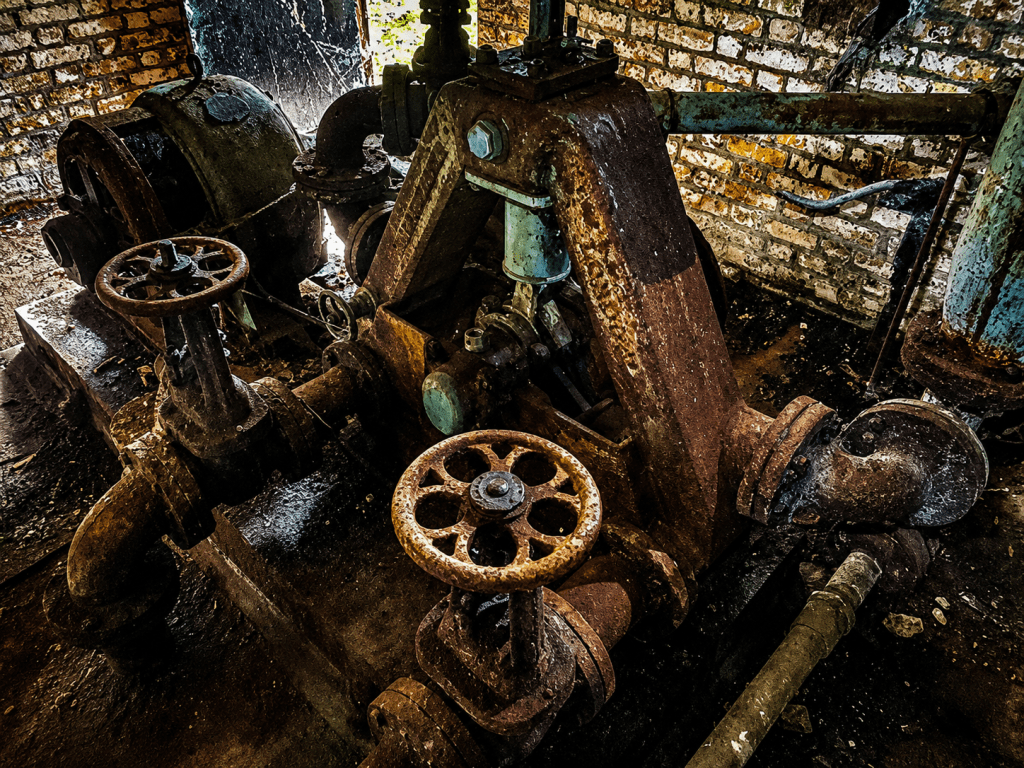
Internally, the original contents remain virtually intact. They include a large, three-piston pump with associated large diameter intake pipework, a large electric motor and a drive chain with cogs. On the adjacent wall is an interesting variable rheostat controller for starting up the motor and a radiator.
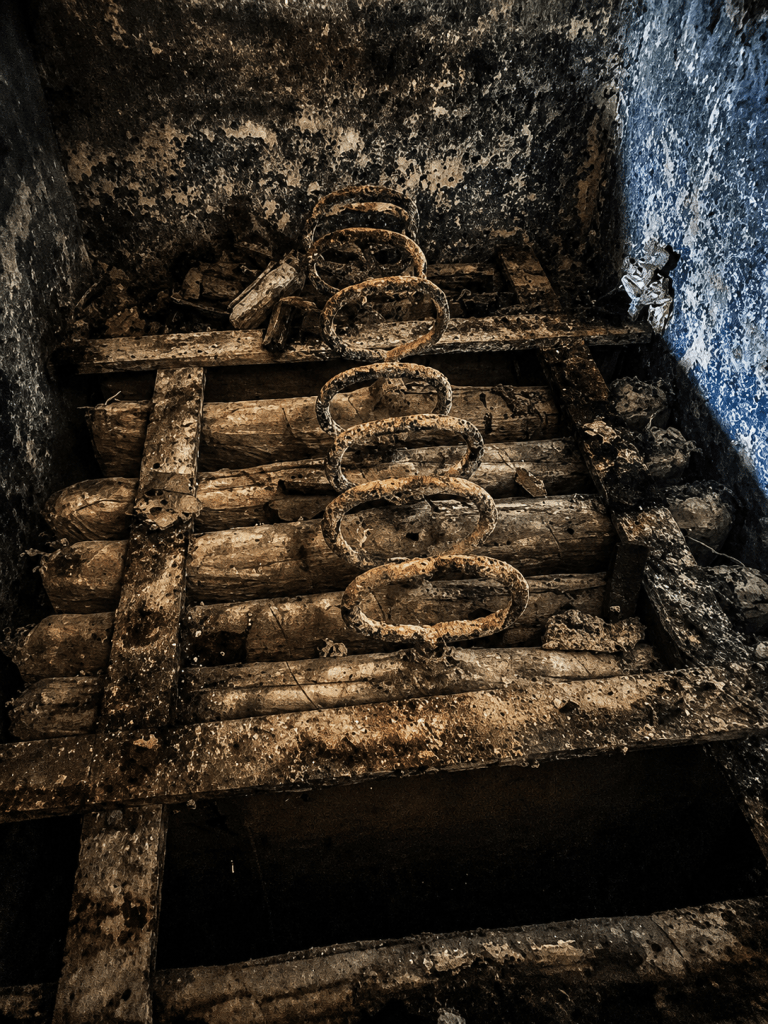
In addition, at the same level on another wall, is a large galvanised tank containing the remains of a water-softening unit. Below the Pump House, and accessed through a hatch cover, is a further very large lined tank occupying the entire footprint. This was recently (2023) drained during the course of investigations by KURG (Kent Underground Research Group). The void has been infiltrated to some extent by the roots of a large beech tree growing to the south of the Pump House.
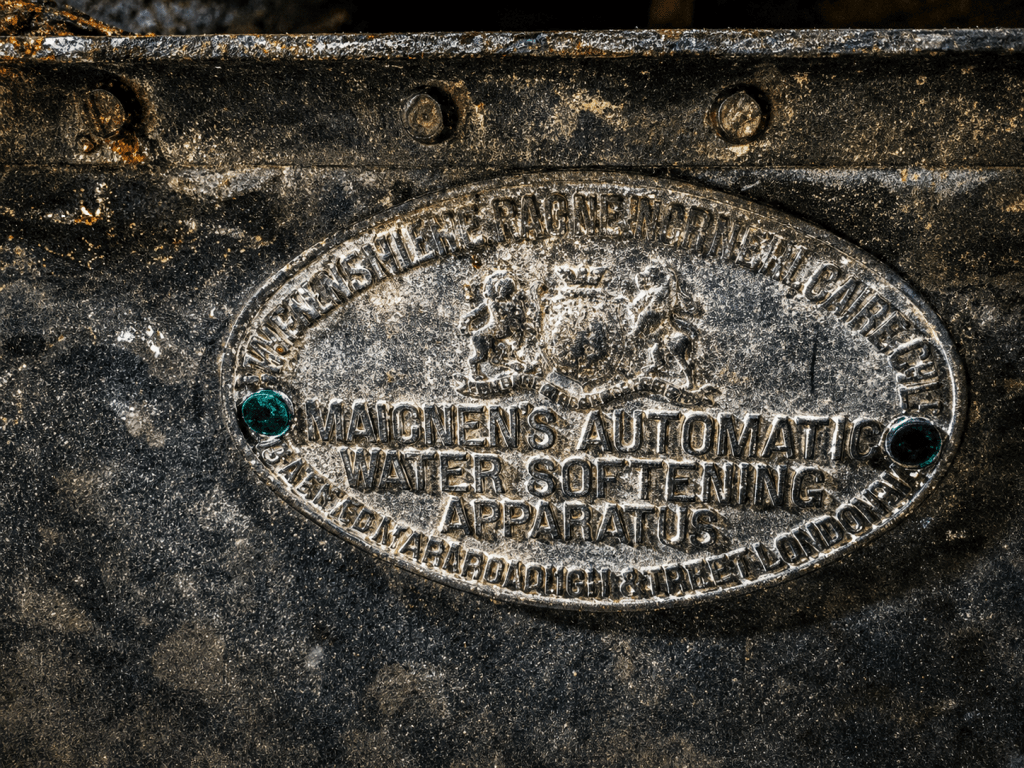
As can be seen in the photographs, the two key names involved in the manufacturing of the pump and the water softening unit are the well-known firm of Merryweather’s of Greenwich, famous for their fire engines, and Maignen’s of 15 Great Marlborough Street, London. There are no obvious dates on either manufacturer’s products, but the motor specification plate does bear the production number of 432, a rating of 100 volts, 1000 revs and 8 BHP.
Being unfamiliar with the name Maignen, an initial Google search produced reference to an advertisement held in the Wellcome Institute Collection for P. A. Maignen’s patent “filtre rapide” (1880s?. This was the first hint of a date for any of the items. However, the linked photograph was a small semi-decorative domestic system and not in any way like the large unit installed here. Further advertisement entries found reference to the company registered at various other addresses including 22-23 Great Tower Street, E.C., Eastcheap and Pall Mall.
There was another reference to Maignen’s large industrial ‘scrubber’ systems in use in Pennyslvania around 1900 for the City’s domestic water supply purification and it seems much more likely to be related to these devices.
http://waterworkshistory.us/bio/Baker/1948Multiple.pdf
The manufacturer’s plaque in the photo shows the Quex water softener device to use Maignen’s Filtre Rapide & Anti Calcaire system that is also documented on-line.
Based on filed patents this would appear to date the installation around 1910. The first reference found, however, was for relatively small domestic units, usually made of pottery, not metal. All of Maignen’s devices appear to have been developed following his observation of the huge loss of life in military campaigns due to water pollution compared to those from injuries received in battle. This led him to produce portable units for use in the field based around Indian water carrying devices called Mussucks. At the heart of these systems was an asbestos filter cloth that was impregnated with both granulated and powdered charcoal.
Purpose of the Quex system/s
Unfortunately, despite Major Percy Powell-Cotton’s extensive documentation of his numerous expeditions to
Africa and Asia, significant aspects of his House and Gardens did not receive the same level of consideration, or if they did, the records seem to have disappeared. It is known that the pump was installed primarily as part of a fire protection system. A very deep pond in the old Italianate garden area, currently estimated to hold some 40,000 gallons of water, after the surrounding wall was increased in height by around 3ft for safety reasons when the House was first opened to the public, provided a primary store of water although the exact source of that water in uncertain. In recent years, a nearby well was sunk in to the chalk aquifer, but whether this was the original water source is unknown. The pump has pipes leading to both the main House as well as, apparently, to the nearby Estate Manager’s house. It fed a large tank in the House attic that in turn was linked to a system of pipes and hydrants for fire fighting. The purpose of a radiator high up on the wall, presumably fed from one of the Walled Garden greenhouse boilers, appears to have been to ensure that all the pipes in the Pump Room remained frost-free in winter.
How the water softener worked is more of a mystery, especially since its location in the Pump House is several hundred yards away from the House. Did the House water supply itself come from the aquifer? There don’t appear to be any pipes connecting the pump to the softener. It would seem likely that it is probably a later addition to the Pump House compared to the pump itself.
Also, despite the current Merryweather motor being electric, its power being sourced from the grid feed to the main House, this could possibly have been superseded by a local diesel generator and prior to that possibly even a steam engine.There is also a question mark over the purpose of a large tank beneath the Pump House. Was this some kind of intermediate storage between the pond and the pump, or separate from it?
The author would welcome any information on either of the systems referred to here, especially the Maignen water softener.
David Riddle
Volunteer Gardener and Researcher


Leave a Reply